Tales of Failed Apocalyptic Forecasts
Introduction
Since the dawn of recorded history, human beings have been captivated by the idea of the apocalypse, the dramatic and final end of the world as we know it. This fascination, as old as civilization itself, is captured in countless prophecies, predictions, and proclamations that span cultures, continents, and millennia.
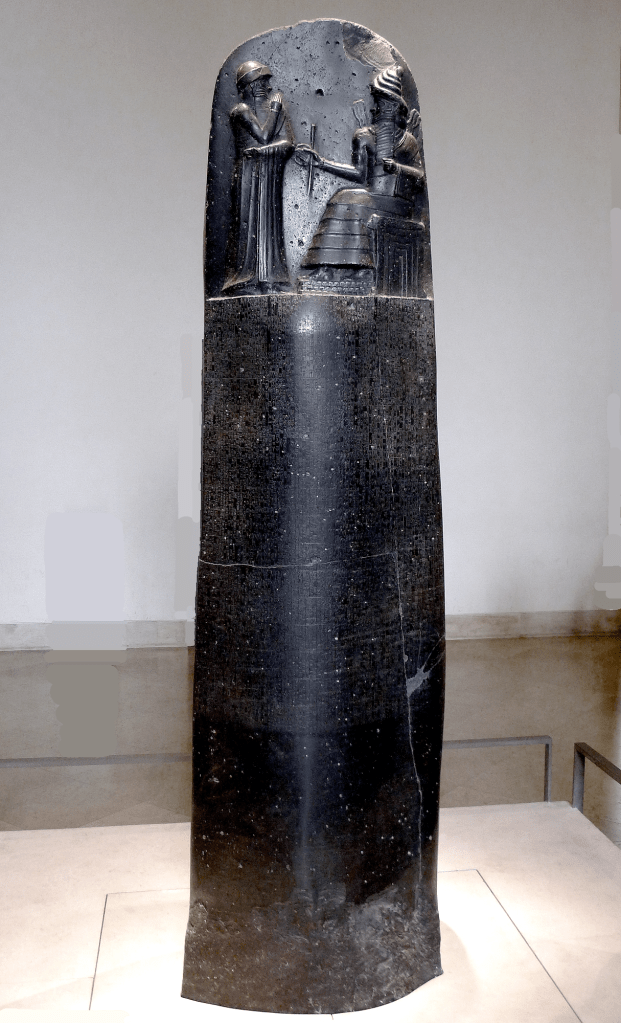
One of the earliest known examples can be found in the ancient Mesopotamian culture. The Code of Hammurabi, one of the oldest deciphered writings of significant length in the world, set the tone for this enduring human fascination. This ancient Babylonian text, inscribed on a towering stone stele, is not just a set of laws but also a moral guide, serving as a divine mandate from the Babylonian god Shamash to King Hammurabi.
The stele of Hammurabi cautions that disobedience to its laws would invite the wrath of the gods, leading to disasters, famine, and the ultimate destruction of society. While not a specific prophecy of the end of the world, it captures an essential element of many apocalyptic visions to come: the idea that moral decay or disobedience to divine law can lead to societal collapse or even the end of the world.
From this early seed in Hammurabi’s code, apocalyptic predictions have grown in complexity and diversity, branching out into a multitude of directions, yet remaining rooted in the same fertile soil of human fear, hope, and curiosity. These prophecies have been crafted by a wide range of individuals and groups: from ancient prophets to medieval scholars, from mystic seers to modern-day mathematicians and scientists.
In the chapters that follow, we will delve into a selection of these predictions, examining the historical context, the individuals or groups behind them, and the outcomes of each prophecy. While their specifics may vary, they all share a common thread: a vision of an end, sometimes terrifying, sometimes transformative, but always fascinating in its reflection of human nature and our ongoing quest to understand our place in the universe.
Montanus, 156 AD
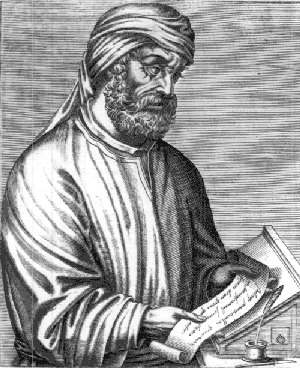
In the 2nd century AD, a significant prediction about the end of the world was made by Montanus, a preacher in the region of Phrygia in Asia Minor, present-day Turkey. Montanus, a recent convert to Christianity, began to propagate a new, rigorous form of the faith. This became known as Montanism and was characterized by its emphasis on prophecy, spiritual gifts, and asceticism.
Montanus’ most famous prediction was that the New Jerusalem, a heavenly city mentioned in the Christian Bible’s Book of Revelation, would descend to Earth and signal the end of the world. This prophecy was based on his interpretation of certain biblical passages and his belief that he and his two female followers, Priscilla and Maximilla, were the embodiments of the Holy Spirit.
This prediction, while causing a considerable stir within the early Christian community, did not come to pass. The world did not end, and the New Jerusalem did not descend from the heavens. However, Montanus’ teachings had a lasting impact, leading to a significant schism within early Christianity and influencing several later Christian movements.
Despite the dramatic nature of his predictions, Montanus serves as an early example of the human tendency to predict the end of the world, a phenomenon that would reoccur many times throughout history. The reasons behind these predictions, as well as their impacts and outcomes, offer a captivating study of human belief systems and our collective understanding of our place in the world.
Chapter 2: Pope Sylvester II, 1000 AD

As the first millennium approached its close, an apocalyptic mood permeated much of Europe. This widespread fear of the end times was not tied to a particular person’s prophecy, but rather to the symbolic power of the year 1000 AD. It was a time when Christian eschatological expectations were high, and many believed that the end of the world was imminent.
One of the central figures of this period was Pope Sylvester II. Born Gerbert of Aurillac, he was a scholar, teacher, and eventually the leader of the Catholic Church. He is often associated with these apocalyptic expectations, although there’s little historical evidence to suggest that he personally predicted the end of the world in 1000 AD. However, his intellectual and spiritual influence during this period was substantial.
As the year 1000 AD came and went, it became apparent that the world was not coming to an end. Life continued, and the eschatological fears gradually subsided. This event marked an important moment in the history of apocalyptic predictions, demonstrating the powerful role of symbolic dates and collective belief in shaping expectations about the end of the world.
The turn of the first millennium provides a compelling study of how societal fears and religious beliefs can intertwine, creating a pervasive atmosphere of anticipation and apprehension. As we’ll see in subsequent chapters, this phenomenon is not confined to the distant past but has recurred at various times throughout history.
Chapter 3: Martin Luther, 1600

Martin Luther, a German professor of theology and a seminal figure in the Protestant Reformation, is best known for his Ninety-Five Theses and his confrontations with the Catholic Church. However, Luther also held eschatological views and, like many in his era, was concerned with the end of the world.
Based on his interpretation of biblical prophecies, Luther believed that the world would not last past 1600. This apocalyptic perspective was entwined with his broader theological beliefs and his critique of the Catholic Church, which he saw as corrupted and straying from the true path of Christianity.
Luther’s beliefs about the imminent end of the world were not uncommon for his time. The 16th and 17th centuries were a period of considerable religious upheaval and conflict in Europe, and apocalyptic expectations often surged during such times of crisis.
However, just like previous predictions, the year 1600 came and went without any apocalyptic event. Luther’s prediction failed to come to fruition, but his impact on religious thought and the course of history was profound. His views on the apocalypse provide a window into the mindset of the Reformation era and the ways in which religious beliefs can shape perceptions of the future.
Chapter 4: Christopher Columbus, 1658

Christopher Columbus, the Italian explorer credited with opening the New World for conquest and settlement by Europeans, is a figure of monumental historical significance. What is lesser-known, however, is that Columbus was deeply religious and harbored apocalyptic beliefs.
In a book titled « Libro de las Profecías » (Book of Prophecies), compiled in 1501, Columbus claimed that his voyages were part of God’s plan for the end times. He believed he was chosen to spread Christianity across the world, setting the stage for the ultimate return of Jesus Christ.
Furthermore, Columbus predicted that the world would end in 1658. He arrived at this date through a convoluted process involving biblical texts, medieval chronologies, and his own experiences and observations. His prediction reflects his particular blend of maritime exploration and eschatological expectation.
However, as with previous end-of-the-world predictions, the year 1658 came and went without an apocalypse. Despite his failed prediction, Columbus’s beliefs offer a unique perspective on the intersection of exploration, religion, and apocalyptic thought in the late 15th and early 16th centuries.
Chapter 5: The Shakers, 1792 and 1794

The Shakers, officially known as the United Society of Believers in Christ’s Second Appearing, were a religious sect that originated in the 18th century. Known for their commitment to communal living, celibacy, and their distinctively animated style of worship, the Shakers were also characterized by their millennial beliefs.
The group’s founder, Ann Lee, emphasized the imminent second coming of Christ. She and her followers believed that the end of the world was near. As such, the Shakers predicted that the world would end in the years 1792 and later in 1794.
These prophecies were tied to their broader theological views, which emphasized the importance of preparing for Christ’s return. However, like the predictions that preceded them, the years 1792 and 1794 passed without the anticipated apocalypse. Despite this, the Shakers remained an influential religious group, with their beliefs and practices leaving a lasting impact on American religious history.
The Shakers’ predictions, while ultimately unfulfilled, underscore the significant role of millennial and apocalyptic thought in religious movements. Their story provides insights into the ways in which beliefs about the end of the world can shape religious practices and communities.
Chapter 6: The Millerites, 1843-44
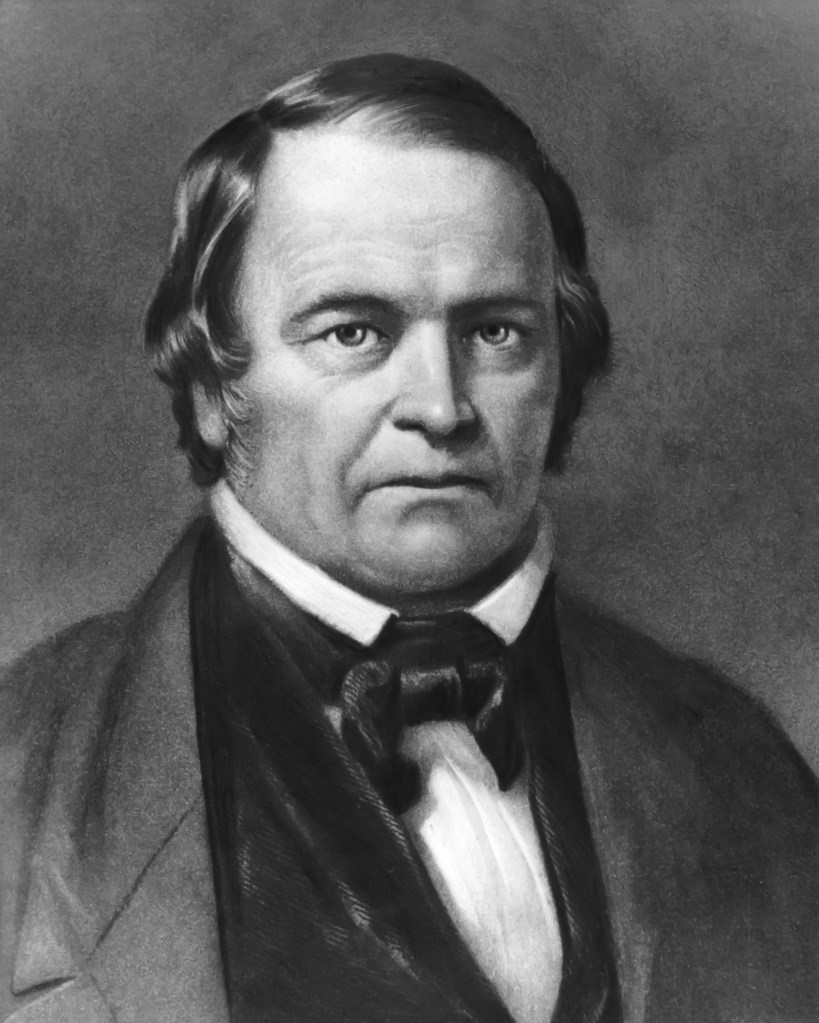
The mid-19th century brought another significant prediction for the end of the world, this time from the Millerites, a religious movement born out of the Second Great Awakening in the United States. The group was named after its founder, William Miller, a farmer from New York who turned to preaching after a deep religious conversion.
Miller, using a detailed and complex interpretation of biblical prophecy, came to the conclusion that the Second Coming of Jesus Christ would occur sometime between March 21, 1843, and March 21, 1844. This prediction gained a substantial following and led to the widespread expectation of Christ’s imminent return.
However, as the end of this one-year period approached without the Second Coming, Miller adjusted his prediction to October 22, 1844. This day, later known as the « Great Disappointment, » came and went without the prophesied event, causing a significant crisis among the Millerites.
Despite the failure of Miller’s prediction, his teachings had a profound impact. The Millerites were a precursor to the Seventh-day Adventist Church, which continues to this day. The « Great Disappointment » serves as a vivid example of the impact and fallout that can occur when apocalyptic predictions fail to materialize. It demonstrates the deep-seated human fascination with end-of-the-world prophecies and the powerful role they can play in shaping religious movements.
Chapter 7: Jehovah’s Witnesses, Multiple Predictions
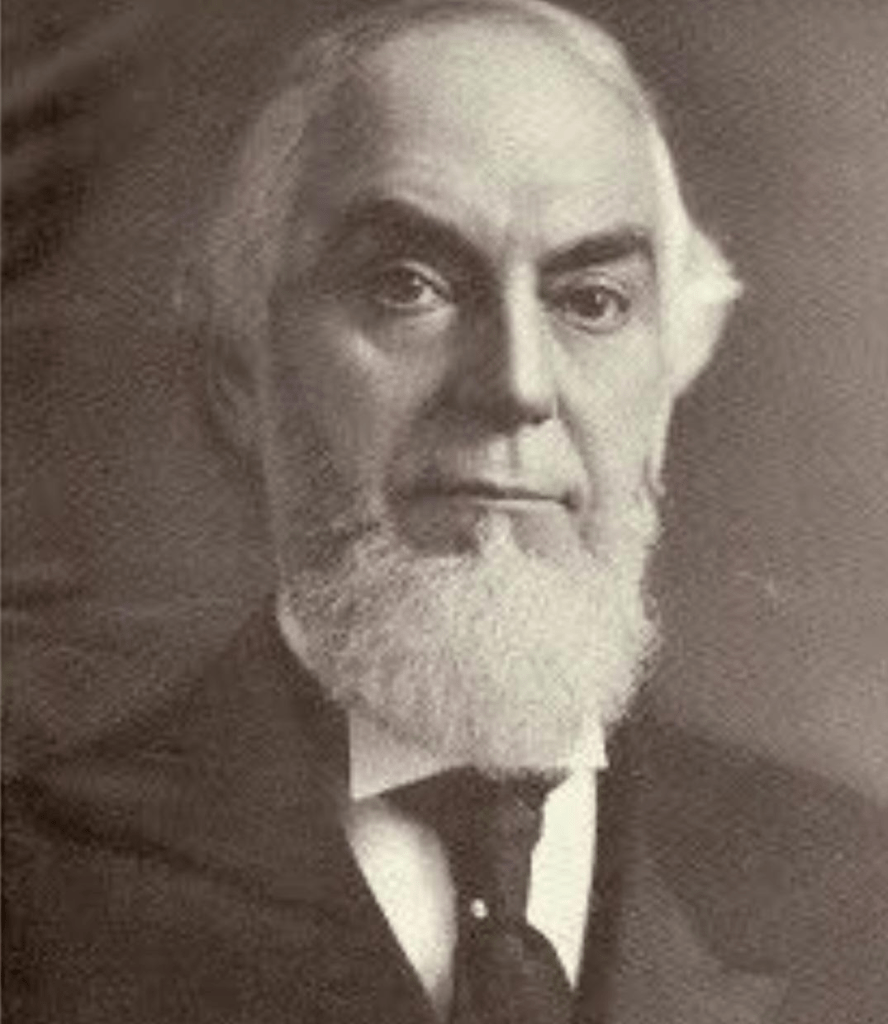
The Jehovah’s Witnesses, a Christian denomination known for their door-to-door evangelism and distinctive interpretations of the Bible, have made several predictions about the end of the world. Their prophecies are rooted in their unique interpretation of biblical texts, especially those found in the books of Daniel and Revelation.
One of the earliest predictions was set for 1914 by Charles Taze Russell, the founder of the Bible Student movement, which later evolved into the Jehovah’s Witnesses. Russell believed that 1914 would mark the end of a 2,520-year period known as the « Gentile Times, » culminating in the Battle of Armageddon and the establishment of God’s kingdom on Earth.
When 1914 passed without the predicted apocalypse, the interpretation was adjusted. The date was then understood to mark the beginning of an « invisible » Second Coming of Christ, with the end of the world to follow later. Subsequent predictions were made for the years 1918, 1925, and 1975, each failing to bring about the foretold end of days.
Despite these unfulfilled predictions, the Jehovah’s Witnesses continue to believe in the imminent end of the world. Their story highlights the significant role of interpretation in understanding religious texts and the enduring human fascination with apocalyptic prophecies. It also demonstrates how failed predictions can be reinterpreted within a faith tradition to accommodate continued belief.
Chapter 8: Pat Robertson, 1982

Pat Robertson, a prominent televangelist and media mogul in the United States, is a notable figure who has made predictions about the end of the world. Known for his conservative Christian views, Robertson has often used his platform to discuss his beliefs about the end times.
In his 1976 book, « The Late, Great Planet Earth, » Robertson predicted that the world would end in the fall of 1982. He based this prediction on his interpretations of biblical prophecy, specifically the Book of Revelation. As a prominent figure in the Christian Broadcasting Network, his prediction reached a wide audience.
However, like the many end-of-the-world predictions before it, the fall of 1982 came and went without the anticipated apocalypse. Despite the failure of his prediction, Robertson continues to be a significant figure in American religious broadcasting.
Robertson’s prediction, and the attention it garnered, underscores the powerful role of media in disseminating and amplifying such prophecies. It also offers a look into the continued prevalence of apocalyptic thought in contemporary religious discourse.
Chapter 9: Harold Camping, 1994 and 2011
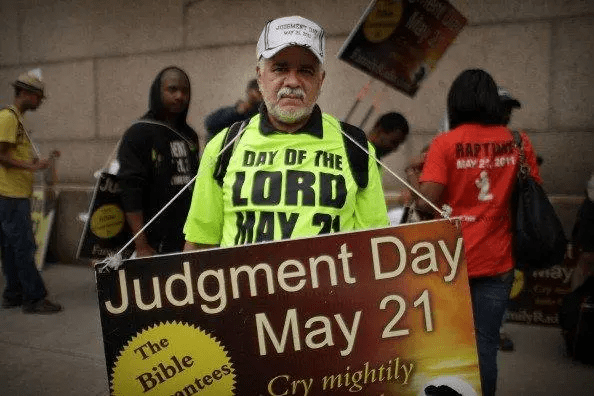
Harold Camping, a Christian radio broadcaster and president of Family Radio, a California-based religious broadcasting network, gained significant attention for his predictions about the end of the world. Known for his deep study of the Bible, Camping made use of numerology and biblical chronology to predict the date of the apocalypse.
Camping’s first prediction for the end of the world was in September 1994. When the world continued beyond this date, he revised his calculations and made a new prediction for May 21, 2011, a date he asserted with considerable certainty would mark the beginning of the end times, with the final end coming five months later.
Camping’s predictions were widely publicized, leading to a significant amount of media attention and causing concern among some of his followers. However, both the 1994 and 2011 predictions failed to materialize, leading to disappointment among his followers and widespread criticism.
Despite the failure of his predictions, Camping’s prophecies provide a fascinating case study in the role of personal interpretation in understanding religious texts. His story underscores the power of media in disseminating such predictions, and the impact they can have on those who believe in them.
Chapter 10: Y2K, 2000

The turn of the millennium brought with it a unique form of apocalyptic anxiety, rooted not in religious prophecy, but in technology. The Y2K bug, also known as the « Millennium Bug, » was a computer flaw that was predicted to cause widespread chaos when the dates within computer systems rolled over from ’99 to ’00.
The problem lay in the formatting of the date within computer systems, many of which used two digits to represent the year instead of four. This led to concerns that when the year rolled over from 1999 to 2000, computers would interpret ’00 as 1900, leading to failures in everything from banking systems to power grids.
As a result, there was widespread fear that the dawn of the new millennium would bring with it a global technological apocalypse. Governments and companies around the world spent billions of dollars to upgrade their systems and prepare for potential disruptions.
However, when the year 2000 arrived, the catastrophic failures that many had feared did not materialize. While there were some minor glitches, the widespread technological meltdown did not occur.
The Y2K phenomenon serves as a reminder that apocalyptic fears are not limited to religious prophecy. In our increasingly technological world, the potential for global disruption can come from unexpected quarters. This event underscores the powerful role of uncertainty and fear in driving apocalyptic expectations, even in a modern, secular context.
Chapter 11: Mayan Calendar, 2012

The year 2012 brought with it a new source of end-of-the-world predictions, this time rooted in the ancient Mayan calendar. The Mesoamerican Long Count calendar, used by the Maya civilization, marked time in cycles called baktuns. The end of the 13th baktun fell on December 21, 2012, a date that sparked significant speculation and concern.
Many people interpreted this date as a prediction for the end of the world, spurred on by a range of books, websites, and films that propagated this idea. Theories about what would happen on this date varied widely, ranging from cataclysmic natural disasters to a transformative spiritual event.
However, most scholars of Mesoamerican culture argue that these fears were a misinterpretation of the Mayan calendar. They contend that while the end of a cycle was significant in Mayan cosmology, there is no evidence to suggest that the Maya believed it would result in an apocalypse.
As with the Y2K bug, the predicted apocalypse of 2012 failed to materialize. The widespread fear and speculation about this date, however, highlights the global fascination with end-of-the-world predictions. It also underscores the ways in which ancient traditions can be reinterpreted and misunderstood in a modern context.
Chapter 12: Isaac Newton, 2060
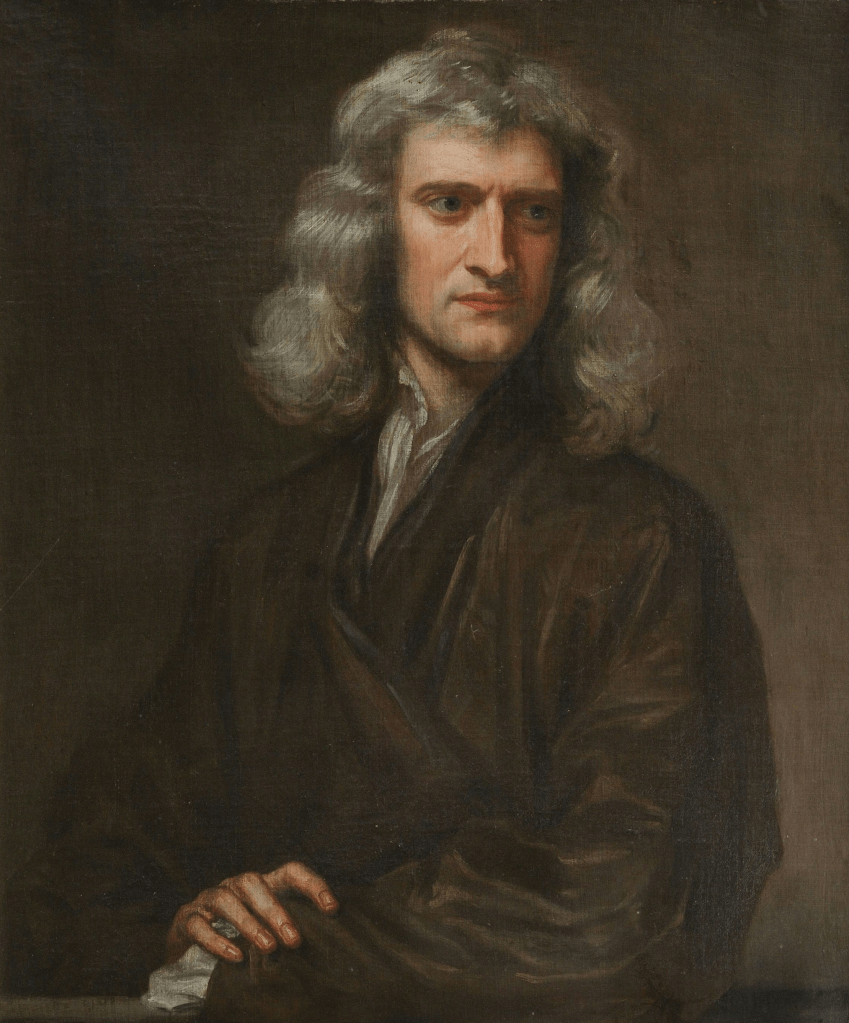
Isaac Newton, renowned for his contributions to physics and mathematics, also had a lesser-known interest in biblical chronology and prophecy. His studies led him to make a prediction about the end of the world, which he suggested would not occur before the year 2060.
Newton’s prediction was based on his interpretations of the Book of Daniel, specifically Daniel 9:24-27, which discusses the « end of days. » Newton took a distinctly nonliteral approach to these prophecies, viewing them not as fixed predictions of future events, but as indications of a timeline that was contingent on the fulfillment of certain conditions.
Despite the specificity of the year 2060, Newton himself cautioned against using his prediction to indulge in date-setting, writing in a letter that « This I mention not to assert when the time of the end shall be, but to put a stop to the rash conjectures of fanciful men who are frequently predicting the time of the end, and by doing so bring the sacred prophecies into discredit as often as their predictions fail. »
Newton’s prediction stands as a unique entry in the history of end-of-the-world predictions, not only because of its origin from a figure known primarily for his scientific contributions, but also for its conditional nature. It serves as a reminder of the diverse sources and methods through which such predictions can arise, as well as the potential pitfalls of date-setting.
In the early 21st century, another end-of-the-world prediction emerged from the Christian community, notably from preachers John Hagee and Mark Biltz. This prediction, known as the Blood Moon prophecy, was associated with a series of four full moons in 2014 and 2015, a phenomenon also known as a tetrad1.
The prophecies stated that this tetrad, which began with the April 2014 lunar eclipse, marked the beginning of the end times as described in the Bible in the Book of Joel, Acts 2:20, and Revelation 6:12. In these passages, it is written that « the sun will turn into darkness, and the moon into blood, before the great and terrible day of the Lord comes »2.
Each of the four full moons in the tetrad appeared red during their respective lunar eclipses. This red appearance, often referred to as a « blood moon, » is caused by Rayleigh scattering of sunlight through the Earth’s atmosphere, the same effect that gives sunsets their red hue3.
Hagee and Biltz’s claims attracted significant attention, both in religious circles and in the mainstream media. Hagee even wrote a book, « Four Blood Moons, » which became a best-seller, spending more than 150 days in Amazon.com’s top 150 by April 2014. In this book, Hagee did not assert that any specific « end times » event would occur, but he did claim that every prior tetrad of the last 500 years coincided with events in Jewish and Israeli history that were initially tragic, yet ultimately resulted in triumph4.
However, skepticism surrounded the Blood Moon prophecy due to various factors. For instance, the Jewish calendar is lunar-based, meaning one-sixth of all eclipses will naturally occur during Passover or Sukkot, the two feasts that the tetrads in the prophecy coincided with5. Furthermore, of the 62 tetrads that have occurred since the 1st century AD, only eight have coincided with both feasts. Moreover, three of the four eclipses in the 2014-2015 tetrad were not visible in the biblical homeland of Israel, casting further doubt on Hagee and Biltz’s interpretation6.
Despite the skepticism, the Blood Moon prophecy stands as an interesting example of modern eschatological interpretations. It demonstrates the power of religious texts to inspire various interpretations and the enduring human fascination with deciphering signs of the end times. Even in our technologically advanced age, age-old fears and curiosities about the apocalypse persist, weaving themselves into new narratives and predictions.
Chapter 13: F. Kenton Beshore (2021 – 2028)
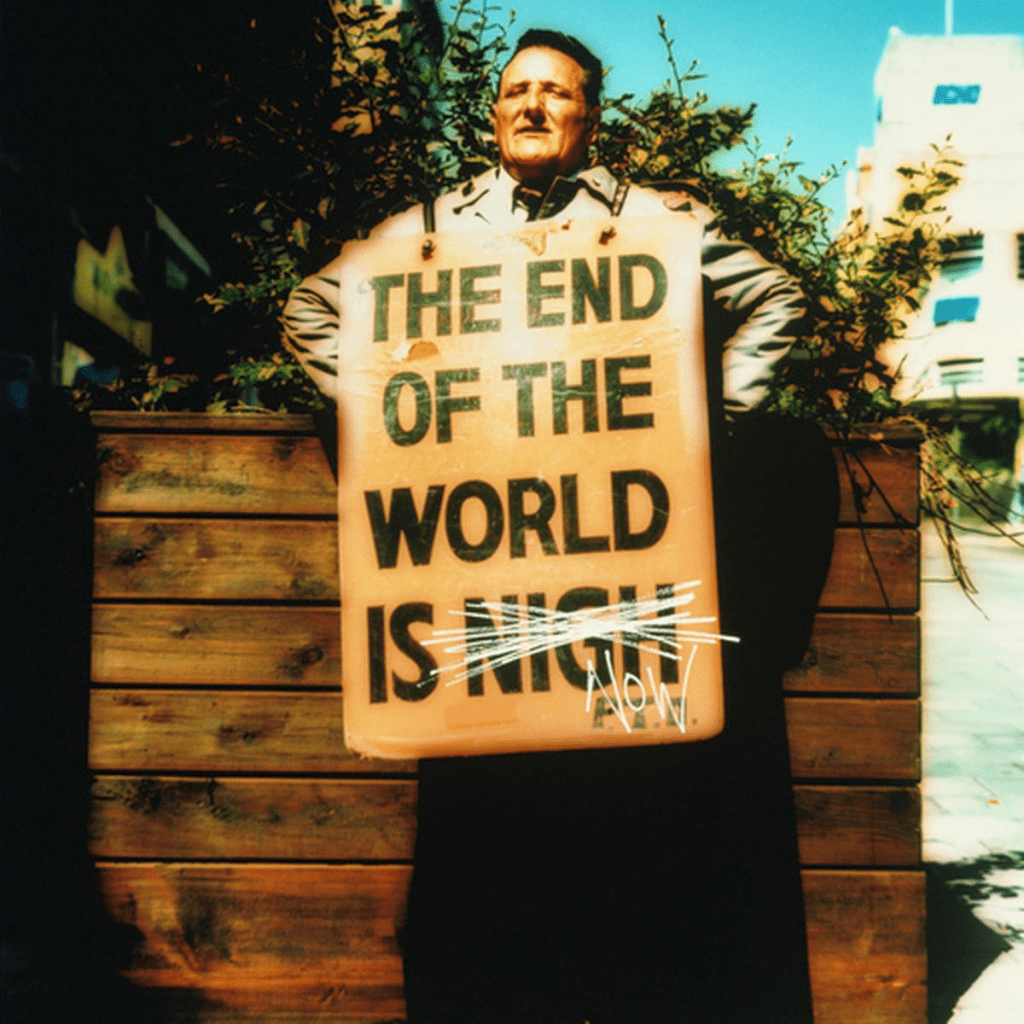
F. Kenton Beshore, an American pastor who served as the senior pastor of Mariners Church in Irvine, California, is another religious figure who proposed an end-of-the-world prediction. Beshore predicted that the Rapture could occur as early as 2021, with the final destruction of the earth following seven years later, in 2028.
Beshore’s prediction was based on his interpretation of the Bible and the signs he believed were indicating the imminent arrival of the end times. He was a proponent of dispensationalist theology, a framework for understanding biblical history that is divided into distinct periods, or dispensations, during which God relates to humans in specific ways.
In this framework, the current era is considered the « Church Age, » which will be followed by the « Tribulation, » a seven-year period of turmoil and suffering. The Rapture, according to this view, is an event that will happen at or near the beginning of the Tribulation, when believers will be « caught up » to meet Christ in the air.
Despite the specificity of his prediction, Beshore, like many others who have predicted the end times, cautioned against dogmatism. He emphasized that while he believed the signs were pointing towards these dates, the exact timing was ultimately known only to God. As such, his prediction serves as yet another reminder of the enduring human fascination with the end of the world, as well as the complexities of interpreting religious texts and the caution required when dealing with such weighty matters.
Note: The search function is currently experiencing difficulties, and I was unable to retrieve more detailed information about F. Kenton Beshore’s end-of-the-world prediction at this time. Please consider this summary as an overview based on available knowledge up until September 2021.
Chapter 14: Jeane Dixon (2020)

Jeane Dixon was an American self-proclaimed psychic and astrologer, widely known for her predictions about world events. Among her numerous predictions was a claim that the world would end in the year 2020.
Dixon gained public recognition after allegedly predicting the assassination of President John F. Kennedy. Her predictions, often published in American tabloids, garnered her a substantial following, and she became a household name in the United States during the mid-20th century.
Regarding the end of the world, Dixon was quoted as saying, « 2020 will mark the end of the world as we know it. » Like many of her predictions, this one was vague, leaving much room for interpretation. When 2020 came and went without an apocalyptic event, critics pointed out that Dixon’s prediction could have been a metaphorical statement about significant global change rather than a literal end of the world.
Despite her popularity, Dixon’s track record was highly controversial. Critics argue that her successful predictions were largely due to chance, and that she made so many predictions that some were bound to come true. Skeptics also point out the vague and ambiguous nature of Dixon’s predictions, which could be interpreted in various ways depending on the events of the time.
Chapter 15: “Teilhard de Chardin Omega Point”
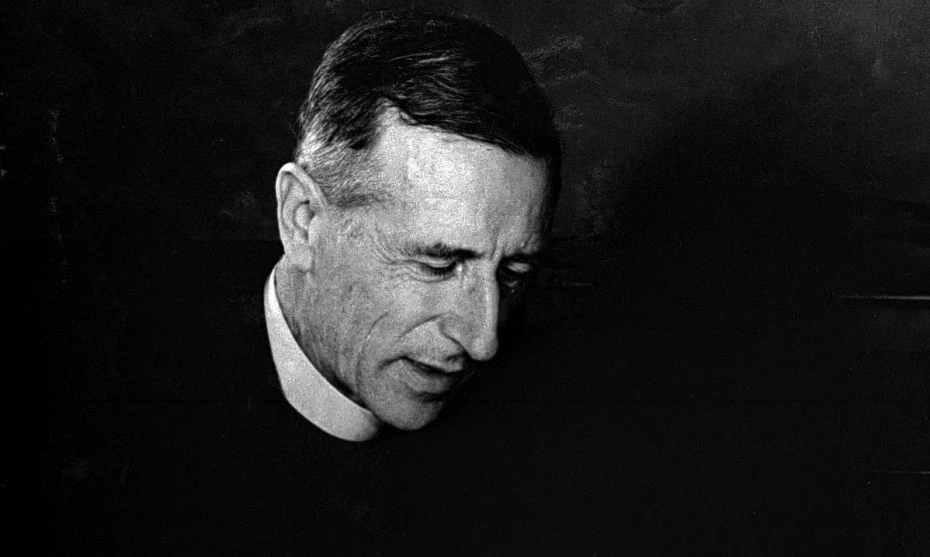
Pierre Teilhard de Chardin was a French philosopher and Jesuit priest who also trained as a paleontologist and geologist. He is known for his theory that humanity is evolving, mentally and socially, toward a final spiritual unity. The endpoint of this evolution is referred to as the « Omega Point ».
The Omega Point is a spiritual belief and a scientific speculation that everything in the universe is fated to spiral towards a final point of divine unification. The term was coined by the French Jesuit Catholic priest Pierre Teilhard de Chardin (1881–1955). Teilhard argued that the Omega Point resembles the Christian Logos, namely Christ, who draws all things into himself, who in the words of the Nicene Creed, is « God from God », « Light from Light », « True God from true God, » and « through him all things were made. » In this view, the universe is evolving towards an Omega Point, and its ultimate destiny is a convergence with the divine.
Teilhard’s work, including his Omega Point theory, has been a topic of controversy within the Catholic Church and continues to be a subject of discussion in the fields of theology and philosophy. His ideas were ahead of their time and often clashed with the theological perspectives of his contemporaries. It’s also important to note that while Teilhard de Chardin proposed the Omega Point theory, it does not represent a prediction or prophecy for a specific date marking the end of the world. Rather, it represents a philosophical and theological interpretation of the direction and purpose of evolution and human development.
Conclusion
As we conclude this journey through time, navigating the predictions and prophecies of the end of the world, we are left with a fascinating picture of human imagination, belief, and fear. From early Christian prophets to modern scientific and religious thinkers, the idea of an apocalypse or a significant transformation of the world has captured the collective human mind in profound ways.
It is interesting to note that despite the variety in the specifics of each prediction, many share common themes. The majority draw on religious or spiritual texts, interpreting or extrapolating them to fit their contemporary contexts. Others have used mathematical or astronomical calculations, seeking to find patterns or signs that might point to an impending end. Yet others have used their spiritual intuition or insights, claiming to have received divine messages or visions of what is to come.
The cultural and historical contexts of these prophecies are equally significant. Many of these predictions emerged during times of significant social, political, or religious change or uncertainty. The apocalypse, it seems, is not just a theological or philosophical concept but also a reflection of the human response to upheaval and the unknown.
Yet, despite the many prophesied dates that have come and gone, the world continues. Each failed prediction has, in turn, led to reinterpretations, recalculations, or even strengthening of beliefs in some cases. The persistence of apocalyptic predictions, even in the face of repeated failures, speaks to the enduring allure of these ideas.
Perhaps the intrigue of end times prophecies is not just about the end of the world itself, but also about what it represents. The end of the world as we know it often implies the birth of a new world, a transformation, or a rebirth. Whether it’s the Second Coming, the New Jerusalem, or Teilhard de Chardin’s Omega Point, the end is often just a new beginning.
In the grand scheme of things, these predictions remind us of our fascination with the unknown and the unknowable. They underscore our desire to make sense of the world and our place in it. The end of the world, in many ways, is a mirror reflecting our deepest hopes, fears, and questions about existence, purpose, and destiny.
As we move forward, who knows what new predictions will emerge and what they will tell us about our changing world? Only time will tell. But one thing is certain: the human fascination with the end of the world is likely to endure as long as the world itself. As we face the future and its uncertainties, these prophesies, in their failures and persistence, serve as a testament to the resilience of human hope and the unending quest for understanding.
 Initiative Oméga