
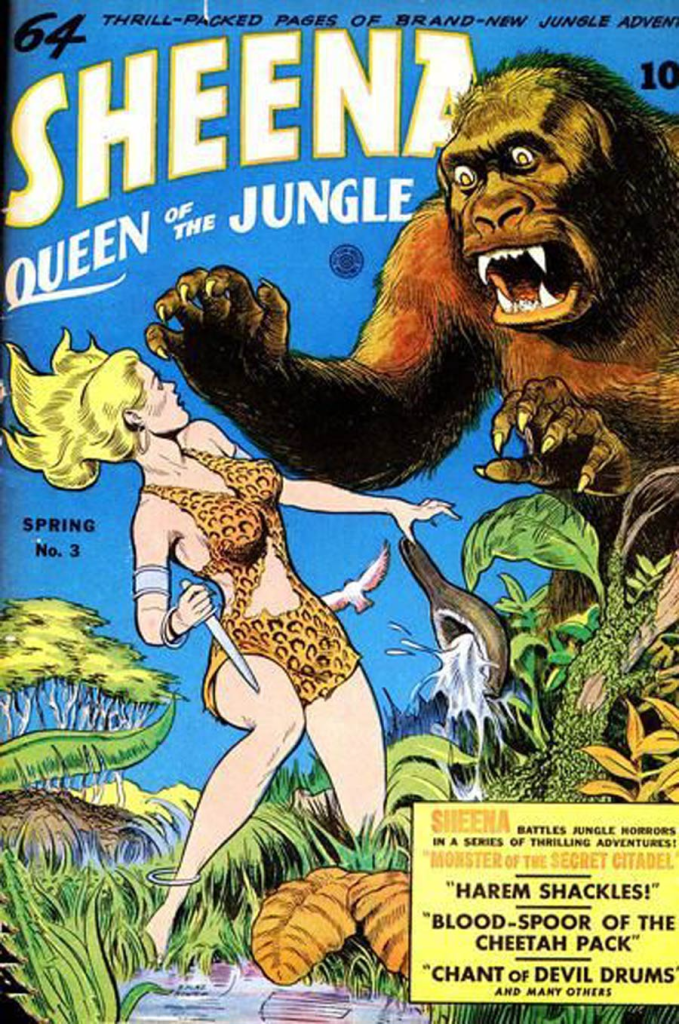
Fiction House was an American publishing company that existed from the 1920s to the 1950s. It was founded by John B. « Jack » Kelly and John W. Glenister, and later led by Thurman T. Scott. Fiction House was known for its pulp magazines and comic books, with its comics division being best known for its pinup-style good girl art, epitomized by the company’s most popular character, Sheena, Queen of the Jungle. The company started as a publisher of primarily aviation, Western, and sports pulps, but by the 1930s, it had expanded into detective mysteries. In late 1932, Fiction House cancelled 12 of its pulp magazines with the stated goal of eventually reviving them. After a hiatus, Action Stories resumed publishing through this period, and Fiction House relaunched its pulp magazines in 1934, finding success with a number of detective and romance pulp titles.
Fiction House’s first title with science fiction interest was Jungle Stories, which was launched in early 1939. It was not primarily a science fiction magazine, but it often featured storylines with marginally science fictional themes, such as survivors from Atlantis. At the end of 1939, Fiction House decided to add an SF magazine to its line-up, and Planet Stories was born. It was published by Love Romances, a subsidiary company that Fiction House created to publish the company’s romance titles.
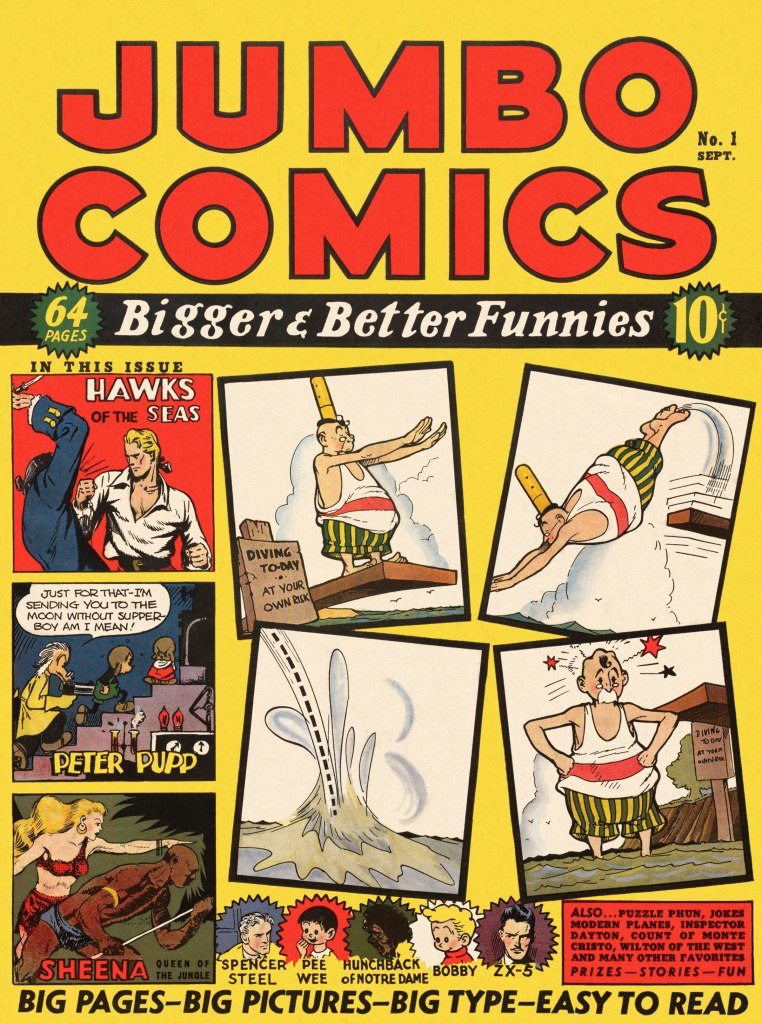
In the late 1930s, Fiction House expanded into comic books, an emerging medium that began to seem a viable adjunct to the fading pulps. The company was receptive to a sales call by Eisner & Iger, one of the prominent « packagers » of that time, which produced complete comic books on demand for publishers looking to enter the field. Publisher Thurman T. Scott published Jumbo Comics #1 (Sept. 1938) under the company’s Real Adventures Publishing Company imprint, with Sheena, Queen of the Jungle appearing in the initial issue. Sheena soon became the company’s star character, appearing in every issue of Jumbo Comics, as well as in her 18-issue spin-off, Sheena, Queen of the Jungle. Other features in Jumbo Comics #1 included three by future industry legend Jack Kirby, representing his first comic-book work following his debut in Wild Boy Magazine.
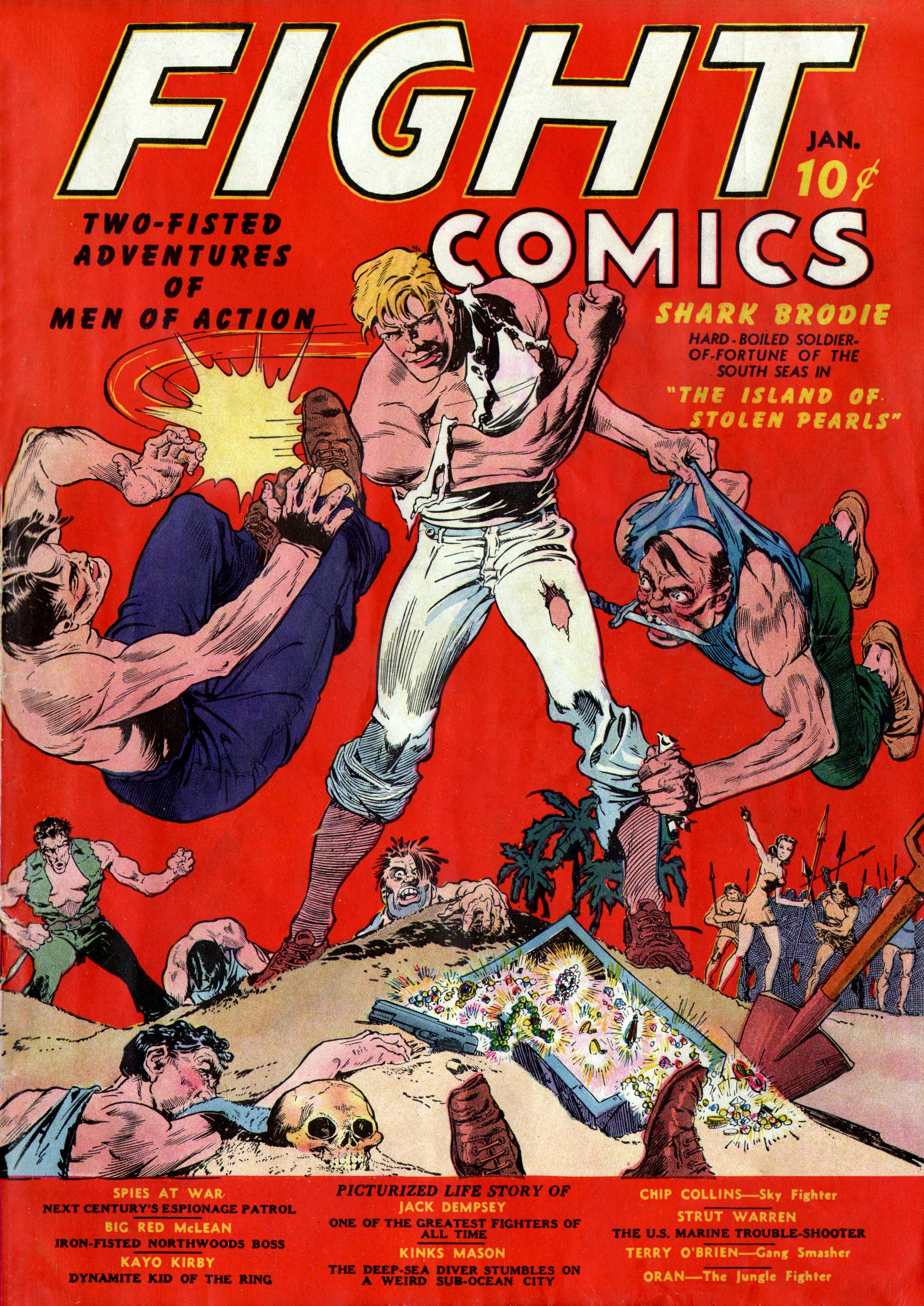
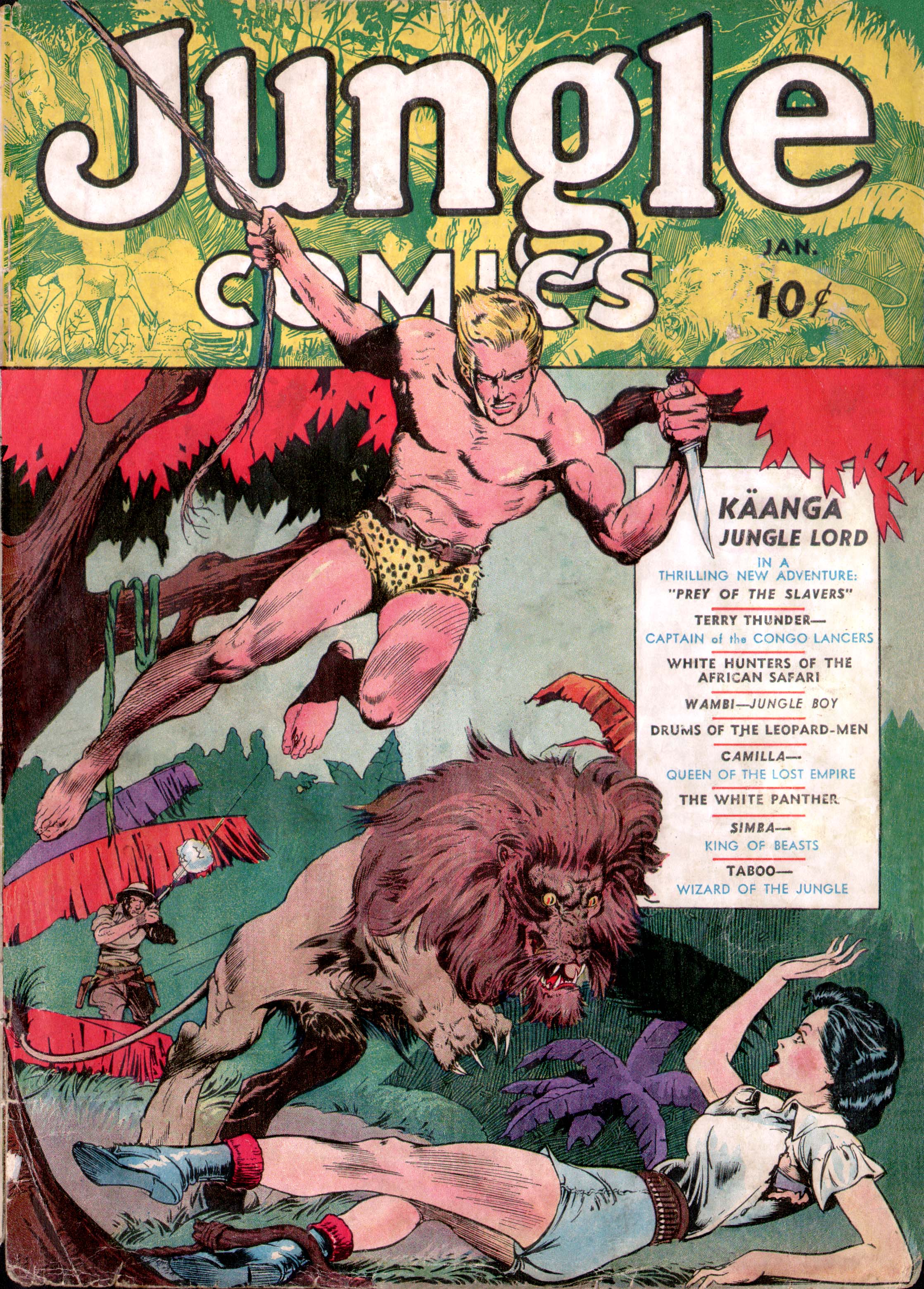
Fiction House went on to publish Jungle Comics, Wings Comics, Planet Comics, Rangers Comics, and Fight Comics during the early 1940s. Most of these series took their titles and themes from the Fiction House pulps. The company also published several other titles, among them the Western-themed Indians and Firehair, jungle titles Sheena, Queen of the Jungle and Wambi, and five issues of Eisner’s The Spirit. Fiction House’s comic books were known for their pinup-style good girl art, with many of the female characters dressed in skimpy outfits and striking provocative poses.
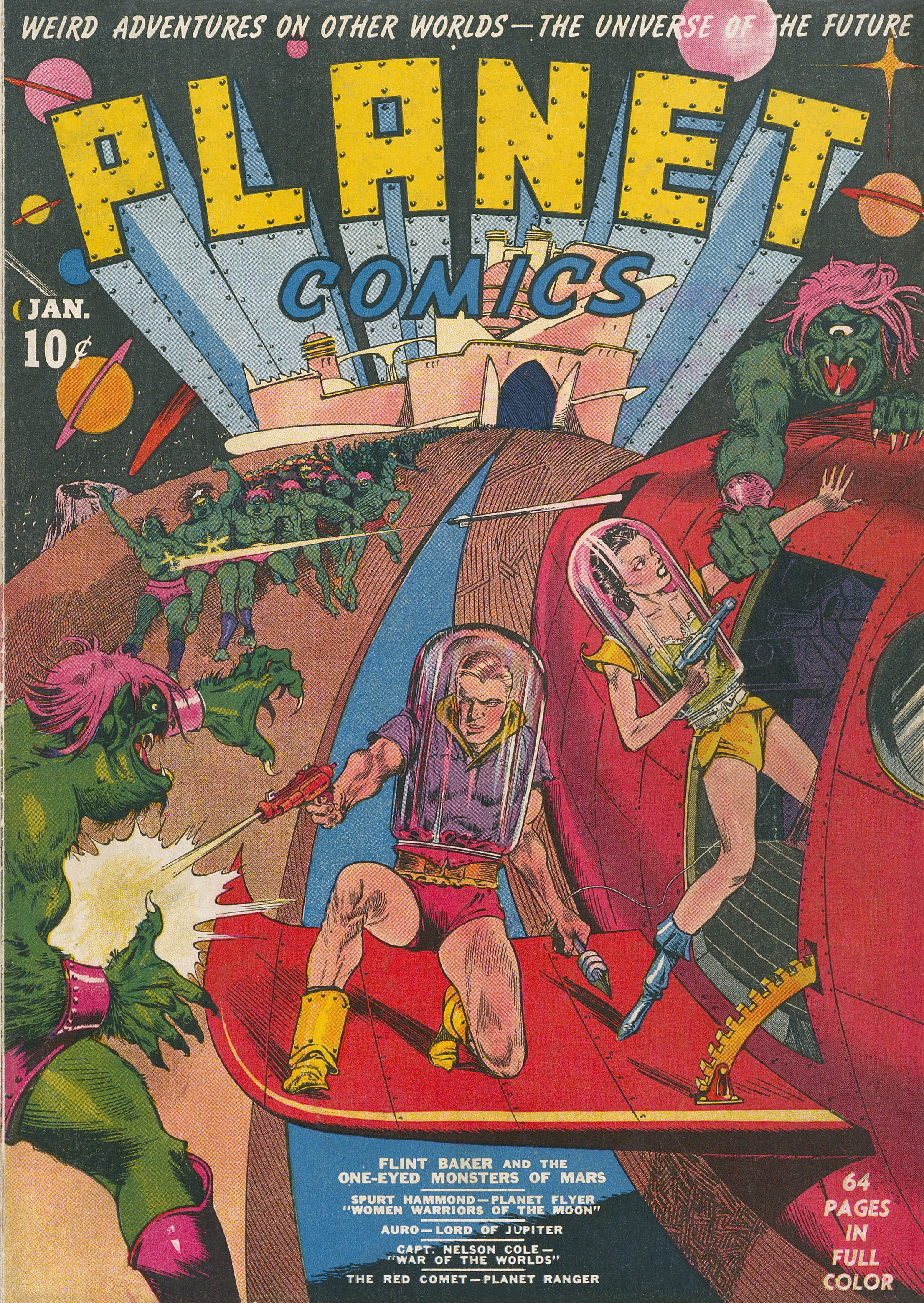
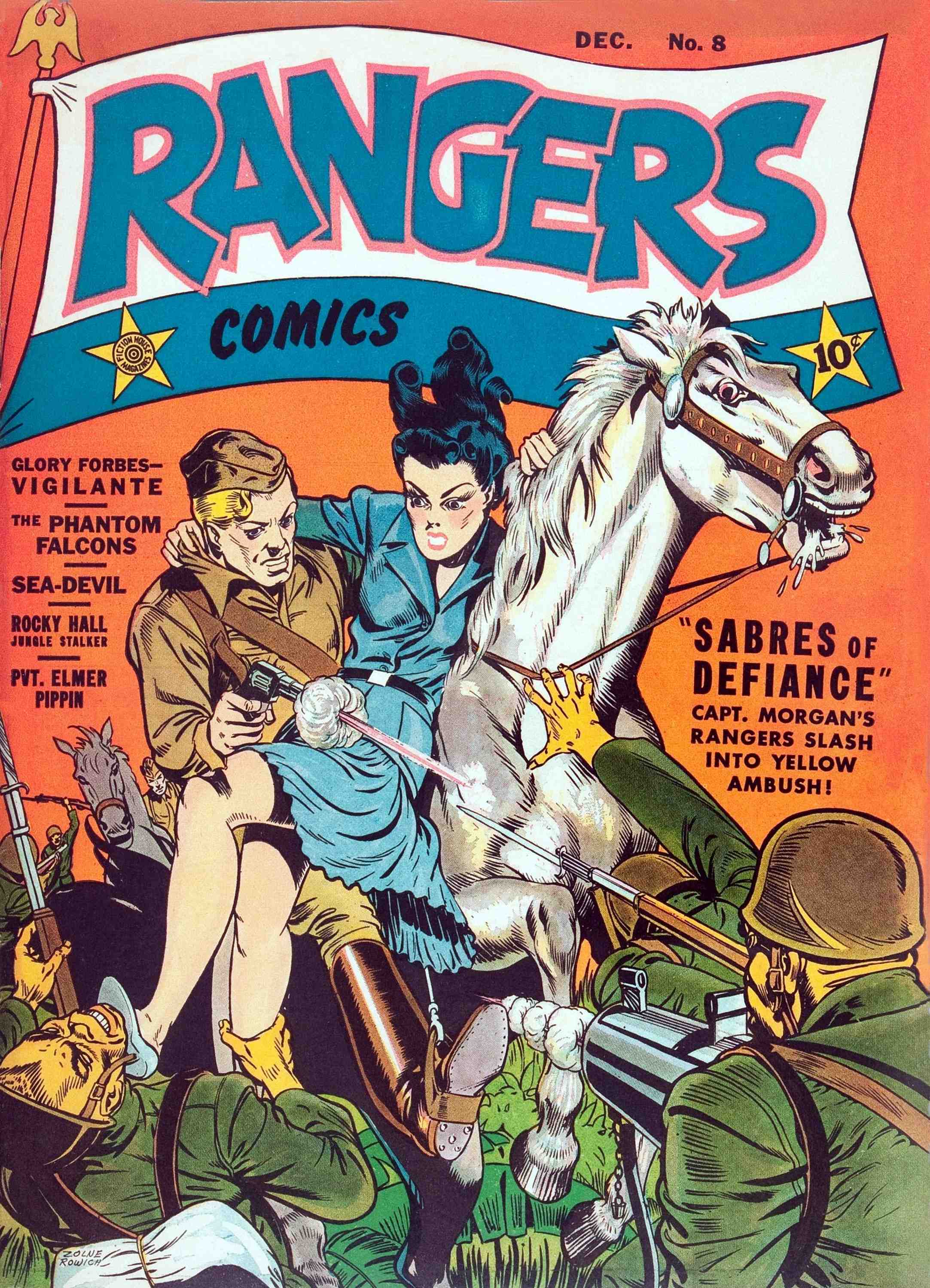
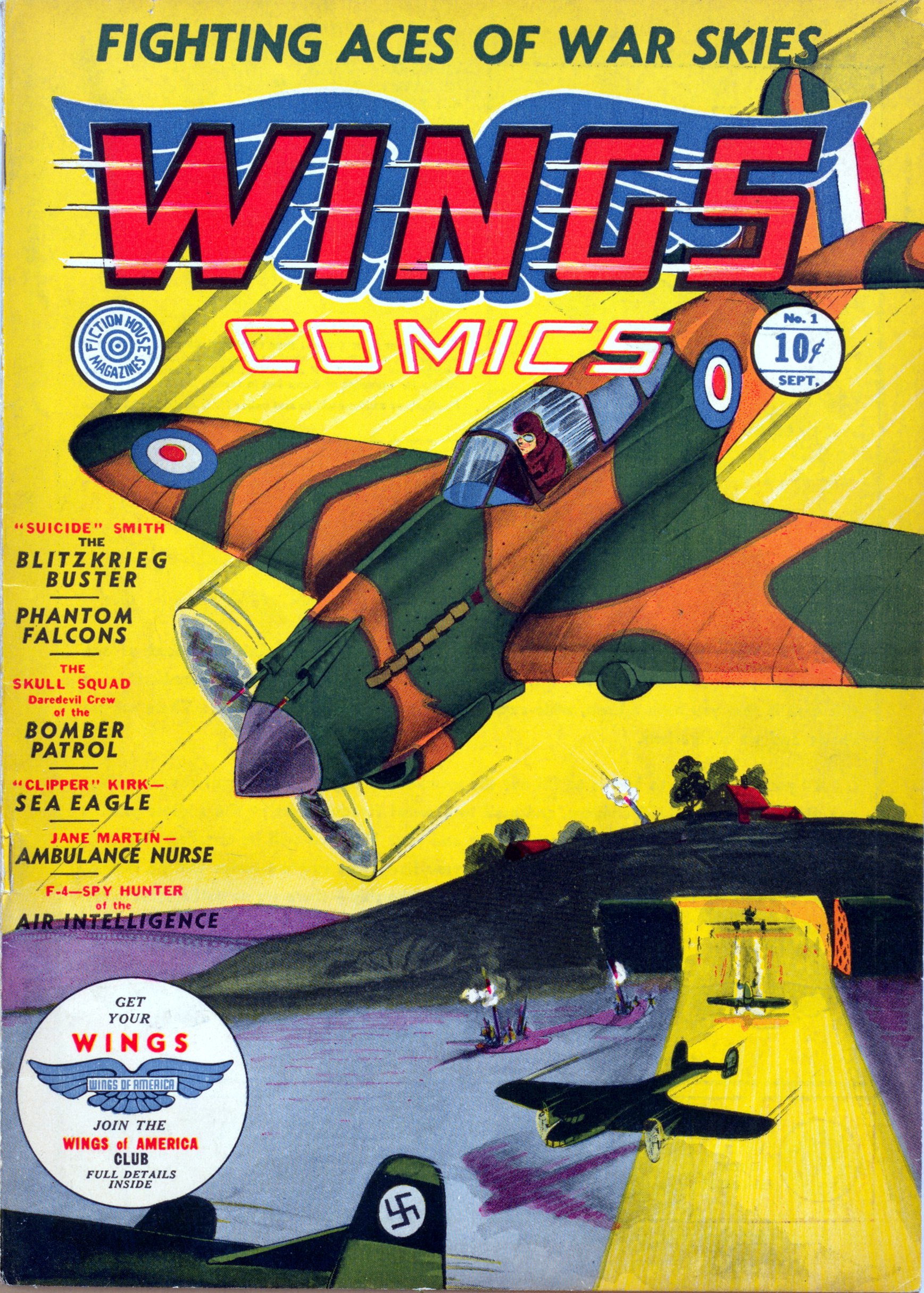
Fiction House was also known for its talented staff of artists, including Mort Meskin, Matt Baker, and Jack Kirby. Baker was the first prominent African-American artist in the comic book industry and is widely regarded as one of the greatest comic book artists of all time. Kirby, who went on to co-create iconic characters such as Captain America, the Fantastic Four, and the X-Men, got his start in the industry working for Fiction House.
In conclusion, Fiction House was a significant publisher in the American pulp magazine and comic book industries from the 1920s to the 1950s. The company began as a publisher of aviation, Western, and sports pulps but expanded into detective mysteries and later science fiction and romance titles. Fiction House’s comic books were known for their pinup-style good girl art, with Sheena, Queen of the Jungle, being the company’s most popular character. The company also employed many talented artists, including Matt Baker and Jack Kirby. Overall, Fiction House played an important role in shaping the early years of the comic book industry and helped to establish some of the key elements of the medium that are still present today.
 Initiative Oméga
Une réflexion au sujet de « Fiction House »